 Internships
DAAD RISE Germany is one of the most established funded summer research programmes for undergraduates, placing students from the United States, Canada, the UK and Ireland into research groups across Germany for two to three months each summer. RISE stands for Research Internships in Science and Engineering, and it is run by DAAD, the German Academic Exchange Service, on behalf of the German Federal Foreign Office. Since the programme began, thousands of bachelor's students have worked alongside doctoral mentors in university laboratories and research institutes connected to the Max Planck, Helmholtz, Fraunhofer and Leibniz networks.
This guide covers who is eligible, what the funding includes, how the matching process works, and how to write an application that stands out. If you are an undergraduate in a STEM subject who wants genuine research experience in Europe with your main costs covered, DAAD RISE Germany deserves a close look.
Key takeaways
- RISE Germany is open to undergraduates enrolled at universities in the US, Canada, the UK and Ireland.
- Eligible fields include biology, chemistry, computer science, physics, earth sciences and engineering.
- You must have completed at least two years of your degree by the time the internship begins.
- Funding typically includes a monthly stipend, a travel allowance, insurance and housing assistance.
- The working language is English, so German is not required for most projects.
What is DAAD RISE Germany?
RISE Germany is a matching programme rather than a single internship. German doctoral students and postdoctoral researchers advertise real research projects in the RISE database, and eligible undergraduates apply directly to the projects that interest them. Hosts then review applications and select the student they want to work with, so every placement is a genuine collaboration instead of a general traineeship.
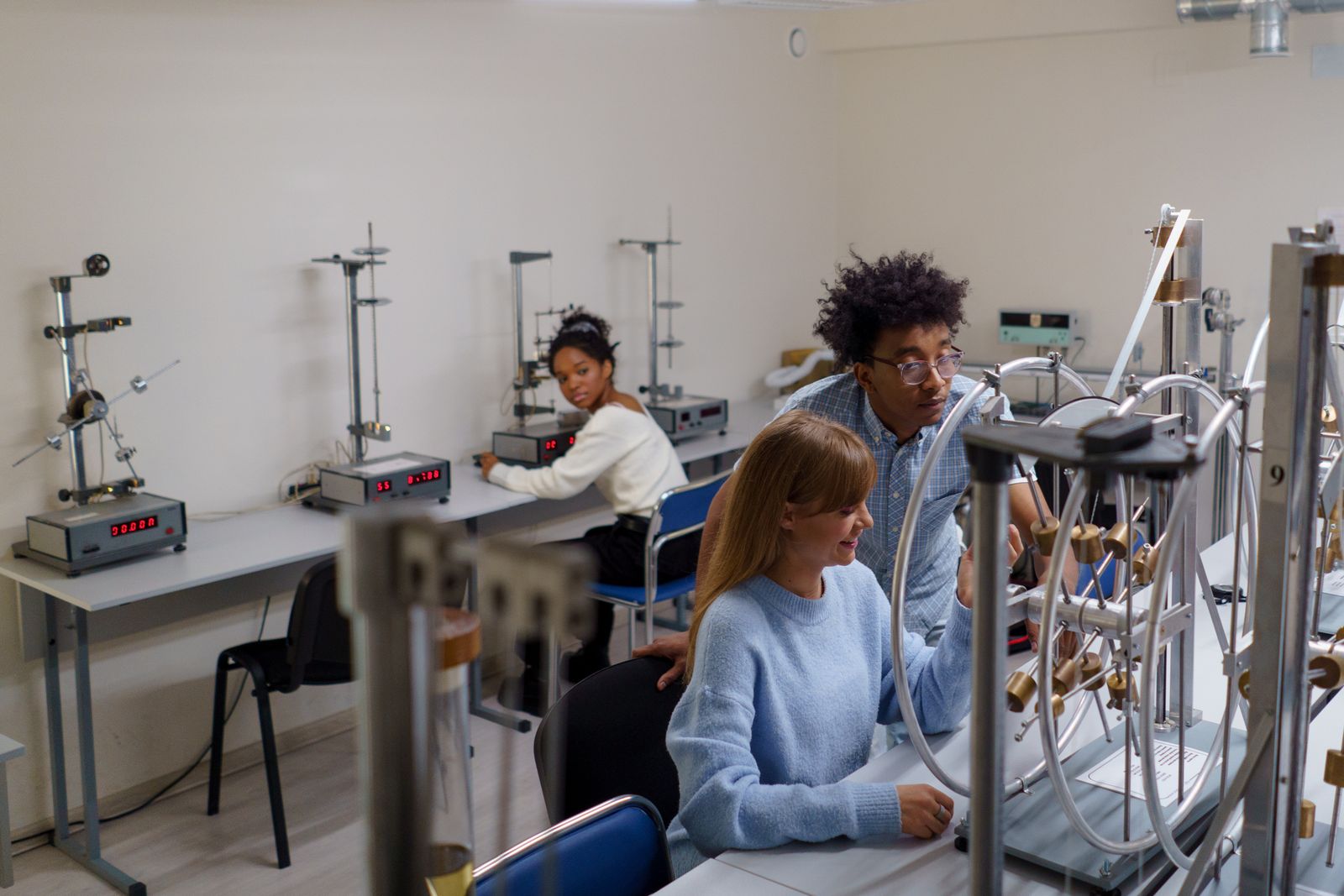
Internships last roughly ten weeks to three months between late spring and early autumn, usually starting between mid-May and mid-July. Interns work on a defined research question, assist with experiments, data analysis or simulations, and present their results, all under the supervision of a PhD-level mentor.
Who is eligible?
To apply, you must be currently enrolled as a full-time undergraduate at a university or college in the United States, Canada, the UK or Ireland, in the field of biology, chemistry, computer science, physics, earth sciences or engineering, or a closely related STEM field. You also need to have completed at least two years of your degree programme before the internship, and you must still hold undergraduate status after it finishes. Recent graduates and master's students are generally not eligible for RISE Germany.
There is no strict grade cut-off published by DAAD, but selection is competitive and hosts tend to favour students with strong academic records and clear research motivation. German language skills are not required for most projects, though a few everyday phrases help outside the laboratory.
What does the funding cover?
DAAD RISE Germany is not a job, so there is no salary. Instead, DAAD provides a monthly stipend designed to cover living costs in Germany, and the amount is updated periodically, so check the official RISE page for the current figure. In addition, the programme usually includes health, accident and liability insurance, a travel allowance toward your transatlantic flight, and a contribution toward the expenses of the mid-programme meeting for interns.
Housing is arranged with the help of the host institution, which typically helps you find a place in a student dormitory or a shared flat. Because the stipend is calibrated to German living costs rather than to your home country's economy, most interns find that the package covers their core expenses for the summer.
How does the matching process work?
Each autumn, DAAD opens the RISE project database at daad.de/rise. You create a profile, upload your documents, and apply to a selection of advertised projects that match your field and interests. Applications usually open around mid-October and close at the end of November, with recommendation letters due a couple of weeks later.
After you apply
Host researchers review the applications they receive and rank their preferred candidates. DAAD then works through the rankings to assign placements, and offers are typically announced between February and March. If you are selected, you receive instructions on paperwork, insurance and your start date, and your host helps you settle in when you arrive.
How to build a strong application
Because hosts select their own interns, project fit matters more than a generic impressive CV. Read each project description carefully, apply only to projects you can genuinely contribute to, and say exactly why that project interests you in your motivation letter. Strong applications usually include a clear CV, academic transcripts, a motivation letter, and one or two recommendation letters from professors who know your work.
It also pays to mention any coursework, projects or laboratory experience that connects to the research topic. A student who can point to a specific technique or course that relates to the project is far more convincing than one who simply says they love science. If you are still building your profile, our guide to building a competitive scholarship profile has practical advice that transfers directly to internship applications.
What if you are not eligible?
If you study outside the four eligible countries, RISE Germany is not open to you, but DAAD runs related programmes. Indian undergraduates can apply through DAAD WISE, and students from many other countries can apply to DAAD RISE Worldwide, which follows a similar model. For a broader view of what DAAD offers, see our guide to DAAD scholarships explained.
How to apply: next steps
Start by confirming your eligibility, then mark the opening of the RISE database in your calendar for October. Prepare your transcripts, CV and a motivation letter template in advance so you can customise it quickly once projects are live. Decide which projects best match your background, ask your referees for letters early, and submit before the November deadline.
Finally, always confirm current dates, eligibility and stipend amounts on the official RISE Germany page at daad.de, because details change each year. For more funded summer options, browse our internships hub and our broader guide to funded summer research internships abroad.
How to find and contact DAAD RISE supervisors before applying
One of the most effective strategies for strengthening your DAAD RISE application is to contact potential supervisors before the application deadline. While the DAAD matching process assigns placements algorithmically based on your preferences and the available projects, reaching out to professors whose work interests you can significantly improve your chances of being matched with a suitable project.
The RISE project database, which is published on the DAAD RISE website, lists available research projects with descriptions, supervisor names, required skills and language requirements. Review the database carefully and identify three to five projects that align with your academic background and interests. Read the project descriptions thoroughly: they indicate the specific skills and knowledge the supervisor is looking for, which helps you tailor your application.
Write a concise, professional email to the professor introducing yourself, stating that you are applying for the DAAD RISE programme and explaining why their specific project interests you. Attach your CV and a brief transcript. Do not send lengthy emails or ask the professor to commit to selecting you; the matching process is managed by DAAD. The purpose of the email is to express genuine interest and to make your name and application memorable.
Follow up once if you do not receive a response within two weeks. Professors are busy, particularly during the academic term, and a polite follow-up is appropriate. If you still do not hear back, do not take it personally; focus your energy on other projects in the database. Many successful RISE matches result from the algorithmic matching process rather than direct supervisor contact.
When you do connect with a professor, ask specific questions about the project: what stage the research is at, what you would be expected to contribute and what skills or preparation would be most useful. This demonstrates genuine engagement and gives you information that strengthens your application essay.
DAAD RISE Germany has specific eligibility requirements that vary depending on your country of study, and understanding these rules before you apply ensures you do not waste time on an application you cannot complete.
The programme is open to students from the United States, Canada, the United Kingdom and Ireland. If you are studying at a university in one of these four countries and are enrolled in a bachelor's degree programme in science, engineering or a closely related field, you are eligible to apply. Students from other countries are not eligible for the standard RISE programme, though DAAD operates similar schemes for other nationalities through different channels.
You must be enrolled as a full-time student at the time of application and must not yet have graduated. Students who have already completed their bachelor's degree are not eligible. The programme is specifically for undergraduates who are still in the process of completing their degree. At the time of writing, there is no strict year-of-study requirement, but the most competitive applicants are typically in their second or third year of a three or four-year degree programme.
You must be studying in a field that is relevant to the available projects. RISE focuses on science, engineering, mathematics and related disciplines. Students in computer science, physics, chemistry, biology, mechanical engineering, electrical engineering and environmental science are all well-suited. Language requirements are project-specific, with some conducted entirely in English and others requiring some German. The project listing in the RISE database indicates the language requirements for each project, so check this carefully before selecting your preferences.
What the DAAD RISE funding covers and realistic cost expectations
DAAD RISE Germany provides funding that covers the major costs of a summer research placement in Germany, though it is important to understand exactly what is included and what you will need to cover yourself.
At the time of writing, DAAD RISE provides a monthly stipend to help cover living expenses during the placement. The stipend is intended to cover accommodation, food, local transport and personal expenses. In addition to the stipend, DAAD provides health insurance coverage for the duration of the placement, which is a significant benefit as health insurance is mandatory in Germany.
DAAD also contributes to travel costs, though the amount may not fully cover your airfare depending on your departure city and the time of booking. The travel grant is intended as a contribution rather than full reimbursement, so budget for the gap. Booking flights early and being flexible with dates can help reduce the out-of-pocket travel cost.
The stipend is set at a level that reflects the average cost of living for a student in Germany, which at the time of writing is manageable in most university cities. Germany's cost of living is lower than many Western European countries, and student accommodation, university canteen meals and public transport are all affordable. Monthly costs in a typical university city range from roughly 800 to 1,100 euros including accommodation, food and transport.
What the funding does not cover includes personal expenses beyond basic living costs, weekend travel, entertainment and any costs incurred before or after the placement period. Budget for the weeks before you receive your first stipend payment and for any expenses that arise during travel to and from Germany. Having a personal buffer of 300 to 500 euros is prudent. The placement typically lasts two to three months during the summer, and the stipend is paid monthly, with the first payment sometimes delayed by a few weeks after arrival.
Preparing for a research internship in Germany: practical advice
Preparing for a DAAD RISE placement in Germany involves both academic preparation and practical logistics, and attention to both dimensions ensures a productive and enjoyable experience.
Academically, review the project description in detail and prepare by reading relevant literature before you arrive. Contact your assigned supervisor or their research group to ask about specific preparation: particular software tools, experimental techniques or theoretical frameworks you should familiarise yourself with. Arriving prepared to contribute from the first week makes a strong impression.
Practically, arrange your accommodation early. Many RISE placements are at university cities where student accommodation is available through the university's student services or Studierendenwerk. Apply for a student dormitory room as soon as you receive your placement confirmation, as demand is high during the summer months. Budget roughly 300 to 500 euros per month for accommodation depending on the city and type of housing.
Open a German bank account shortly after arrival if your placement lasts more than a few weeks. Many landlords and service providers require a German bank account for payments. Deutsche Bank, Commerzbank and N26 are commonly used by international students and all have English-language services. Bring your passport, proof of enrolment and your RISE acceptance letter to the bank when you apply.
Learn basic German phrases before you arrive. Even if your research is conducted in English, daily life in Germany involves German: shopping, transport, administrative tasks and social interactions. A few weeks of language practice before the placement makes a significant difference in your comfort level and your ability to navigate the country independently. Plan for the social and cultural aspects of the placement as well: Germany has a rich cultural landscape, and the experience of living and working in Germany is as much about cultural immersion as it is about research.
The application essay is one of the most important components of your DAAD RISE application, and writing a strong one requires clarity, specificity and a genuine connection between your interests and the projects you have selected.
Start by explaining why you are interested in the specific projects you have chosen. Do not write a generic essay about your love of science or your desire to travel. Describe the technical aspects of the research that appeal to you, how they connect to your academic work and what you hope to learn from the experience. If you have relevant coursework, lab experience or personal projects that relate to the project topics, mention them briefly.
Address your academic background honestly. If you have strong grades in relevant subjects, mention them. If your background has gaps, acknowledge them and explain how you plan to bridge them. The RISE programme values enthusiasm and potential alongside existing knowledge, so do not be discouraged if you are not yet an expert in the project area.
Describe what you hope to gain from the experience and how it fits your broader academic and career plans. The RISE programme aims to develop the next generation of researchers, and the selection committee wants to see that a summer research placement in Germany is a meaningful step in your development, not just a summer adventure.
Keep the essay focused and concise. The word limit is modest, so every sentence should serve a purpose. Avoid repetition, avoid vague statements and avoid listing achievements that are already on your CV. The essay is your opportunity to show the committee how you think and what motivates you. Finally, proofread carefully: spelling errors, grammatical mistakes and unclear sentences undermine an otherwise strong application. Have a friend, professor or advisor review your essay before you submit it.
After the DAAD RISE placement: leveraging the experience for your career
A DAAD RISE placement is a significant professional achievement, and leveraging it effectively after you return to your home university strengthens your career trajectory. The students who benefit most from RISE are those who treat the placement as the beginning of a professional relationship rather than a standalone summer experience.
Start by maintaining contact with your supervisor and colleagues in Germany. A brief email after returning home thanking them for the experience and summarising what you learned keeps the relationship alive. If you produced any research outputs during the placement, such as a poster, report or presentation, share these with your supervisor and ask for feedback. This demonstrates professionalism and keeps the door open for future opportunities.
Document the experience thoroughly for your CV and professional profiles. Describe the project, the research methods you used, the skills you developed and any outcomes. International research experience is highly valued by graduate programmes and employers, and a well-documented RISE placement strengthens your applications significantly.
Consider whether the RISE experience has clarified or redirected your academic and career goals. Many RISE alumni pursue graduate studies in the research area they explored during their placement, sometimes returning to Germany or to the same research group. Others discover new interests or confirm that research is not the right path for them, which is equally valuable. Reflect on what you learned about yourself, your field and the kind of work environment where you thrive.
Share your experience with students who are considering RISE. Write a brief summary for your department's website or student newsletter, speak at an information session, or offer to advise applicants. Contributing to the RISE community strengthens the programme and builds your reputation. Finally, explore whether your university has partnerships or exchange agreements with German institutions that could facilitate a return to Germany for graduate study. The connections you built during your RISE placement may open doors that you would not have discovered through standard application channels.
Hearing from previous DAAD RISE participants provides practical insight that official programme descriptions cannot. Alumni consistently report that the summer research experience in Germany was one of the most formative periods of their academic careers, combining rigorous research with cultural immersion in a way that few other programmes can match.
Many alumni describe the research experience as the first time they felt like genuine scientists rather than students completing assignments. Working alongside doctoral researchers and principal investigators in a German laboratory or engineering group exposes you to the reality of research life: the day-to-day problem-solving, the collaboration, the setbacks and the breakthroughs. This experience often clarifies whether a research career is the right path, which is valuable regardless of which direction you ultimately choose.
Culturally, alumni report that living in Germany for two to three months provides a deeper understanding of European academic culture than any short visit could. German universities operate with a level of independence and self-discipline that many international students find refreshing. The structure of a German research group, where students are treated as colleagues rather than subordinates, is often cited as a highlight of the experience.
The professional network built during a RISE placement is another commonly cited benefit. Alumni maintain contact with their supervisors, fellow interns and colleagues in Germany, and these relationships have led to graduate school placements, research collaborations and job opportunities. The RISE alumni community itself is a valuable resource, with many alumni willing to advise current and prospective participants.
Practically, alumni recommend applying early, being flexible with project and country preferences, and arriving well-prepared with relevant coursework and reading. They also recommend learning some basic German before arrival and budgeting carefully for the first few weeks before the stipend payments begin. The RISE experience rewards preparation and initiative, and students who approach it with curiosity and energy consistently describe it as a turning point in their academic and professional development.
DAAD RISE Germany application tips for a competitive candidacy
A strong DAAD RISE application demonstrates genuine scientific curiosity, relevant technical preparation and the maturity to thrive in a research environment abroad. The programme receives thousands of applications each year from students across the United States, Canada, the United Kingdom and Ireland, and the selection process rewards candidates who combine academic ability with practical readiness.
Your academic record matters, but it is not the only factor. Strong grades in your major field are expected, but the selection committee also looks at the breadth of your preparation: have you taken courses that are directly relevant to the projects you are applying for? Do you have laboratory experience, programming skills or research methodology training? If your transcript shows strong performance in the subjects most relevant to your chosen RISE projects, that is more valuable than a high GPA in unrelated courses.
The projects database is your most important resource. Spend time reading through the available projects carefully, paying attention to the required skills, the language of the project and the supervisor description. Select projects that genuinely match your preparation and interests, not just the ones in the most popular destinations. Students who apply for projects that align closely with their skills and coursework receive offers more often than those who apply broadly to projects that are only loosely related to their background.
When writing your application essay, be specific about why you are interested in the projects you have selected. Reference the supervisor research, explain how your coursework or project experience has prepared you for the work, and describe what you hope to learn. Avoid generic statements about wanting to study abroad or gain international experience. The committee wants to see that you are motivated by the science, not just the travel.
Finally, consider the practical aspects of your application. Make sure your transcripts are up to date and clearly show your grades. Ask your professors for recommendations early and give them enough time to write strong letters. Submit your application well before the deadline. These administrative details may seem minor, but a complete, polished and timely application signals the professionalism and attention to detail that a research placement demands.
DAAD RISE placement countries and what each offers
DAAD RISE placements are available across Germany, and understanding the characteristics of different locations helps you choose projects strategically. Germany has a decentralised research landscape, meaning that excellent research is conducted across the country rather than concentrated in a single city or region.
Munich is home to some of Germany's leading technical universities, including the Technical University of Munich and Ludwig Maximilian University, as well as research institutes in the Max Planck and Fraunhofer networks. Munich is an expensive city but offers a vibrant cultural scene, excellent public transport and proximity to the Bavarian Alps. Research placements in Munich tend to focus on engineering, physics and computer science.
Berlin is Germany's capital and largest city, with a dynamic research community centred on institutions such as the Technical University of Berlin, Humboldt University and the Free University of Berlin. Berlin is more affordable than Munich and offers a diverse, international environment. Research placements in Berlin span engineering, natural sciences and interdisciplinary fields.
Heidelberg is one of Germany's oldest university cities and is home to Heidelberg University, one of the country's most prestigious research institutions. The city is compact, beautiful and focused on academic life. Research placements in Heidelberg often involve biomedical research, chemistry and physics, with strong connections to the European Molecular Biology Laboratory and the German Cancer Research Centre.
Other major RISE locations include Hamburg, Stuttgart, Aachen, Dresden and Karlsruhe, each with its own research strengths and character. Hamburg is strong in logistics, maritime engineering and climate science. Stuttgart is a centre for automotive engineering and manufacturing. Aachen is known for engineering and materials science. Dresden has growing expertise in microelectronics and nanotechnology. Karlsruhe is strong in computer science and nuclear engineering. Consider not just the research focus but also the living environment when choosing your project preferences, as two or three months in the right city makes a significant difference to your overall experience.
DAAD RISE Germany frequently asked questions
Prospective DAAD RISE applicants often have practical questions about the programme. This section addresses the most common queries to help you prepare a strong application and plan your placement effectively.
Can I apply to more than one project? Yes. You typically indicate several project preferences in your application, and the DAAD matching team uses these preferences to find the best fit. Being open to multiple projects and countries significantly improves your chances of receiving a placement.
What if I have no previous research experience? RISE is designed for undergraduates who are developing their research skills, so prior research experience is valued but not strictly required. What matters more is your coursework, your technical preparation and your genuine interest in the project. Strong grades in relevant subjects and a well-articulated motivation can compensate for limited research experience.
Do I need to speak German? The language requirements depend on the specific project. Many RISE projects are conducted entirely in English, particularly in international research groups. However, some projects require basic or intermediate German proficiency, especially those in more locally focused research groups. Check the project listing for language requirements and factor them into your preferences.
What happens if I am not matched with any project? If you are not matched in the first round, you may be offered a placement in a second round if additional projects become available. If no placement is found, you can apply again the following year. Some successful RISE alumni were not selected on their first attempt and used the additional year to strengthen their preparation.
Can I extend my placement beyond the standard duration? The standard RISE placement is two to three months. Extensions beyond this period are possible in some cases, but they depend on the host organisation willingness and the availability of additional funding. Discuss this possibility with your supervisor early in the placement if you are interested in extending. The core RISE funding covers the standard duration, and any extension would need to be supported separately.
Is there any obligation to return to my home country after the placement? Unlike some scholarship programmes, RISE does not impose a return-home obligation. The programme is designed to provide international research experience and to strengthen connections between German research institutions and universities worldwide. Many RISE alumni return to Germany for graduate study or later in their careers, and the programme actively encourages ongoing connections with the German research community.
Making the most of your DAAD RISE placement academically and personally
Once your DAAD RISE placement begins, making the most of it requires deliberate effort in both your research and your cultural experience. The two to three months pass quickly, and the alumni who rate their placements most highly are those who planned how to engage fully from the start.
Remember that the DAAD RISE community itself is part of the experience, so connect with your fellow interns early, exchange tips and keep in touch after returning home.
Academically, treat the placement as a professional research role rather than a student exercise. Arrive prepared: review the project description, read relevant literature suggested by your supervisor and ask questions from the first day. Ten weeks is short, so the faster you can contribute, the more you will accomplish and learn. Attend group meetings, present your work when asked and seek regular feedback from your supervisor and colleagues.
Use the placement to strengthen your research skills deliberately. Learn the laboratory techniques, software tools and analytical methods the group uses. Ask experienced researchers how they approach problems, how they design experiments and how they interpret results. Observe how the group communicates, writes and collaborates, and model your own habits on the best examples. These professional practices will serve you throughout your academic career.
Personally, engage with German culture and life. Practice your German, even in the research setting. Join fellow interns for weekend excursions, attend local events and explore the cities and countryside around your placement. Many RISE participants form friendships across nationalities that last for years, and the cultural immersion is one of the most enriching aspects of the programme. In your final weeks, reflect on what you have learned and document your experience for your CV, graduate applications and future plans.
Official sources and references
- daad.de — official information and resources.
- make-it-in-germany.com — official information and resources.
DAAD RISE internship package
What funded summer research through DAAD RISE includes.
| Component | Included | Notes |
|---|---|---|
| Monthly stipend | Yes | Covers living costs |
| Language course | Optional | Pre-trip study |
| Travel | Partial | Booked after placement |
| Placement | Yes | Matched lab placement |
| Visa support | Guidance | Advice and letters |
Related guides
- How to Get a Funded Research Internship Abroad
- Google Internships: How to Apply & Get Hired
- Part-Time Jobs for International Students (2026)